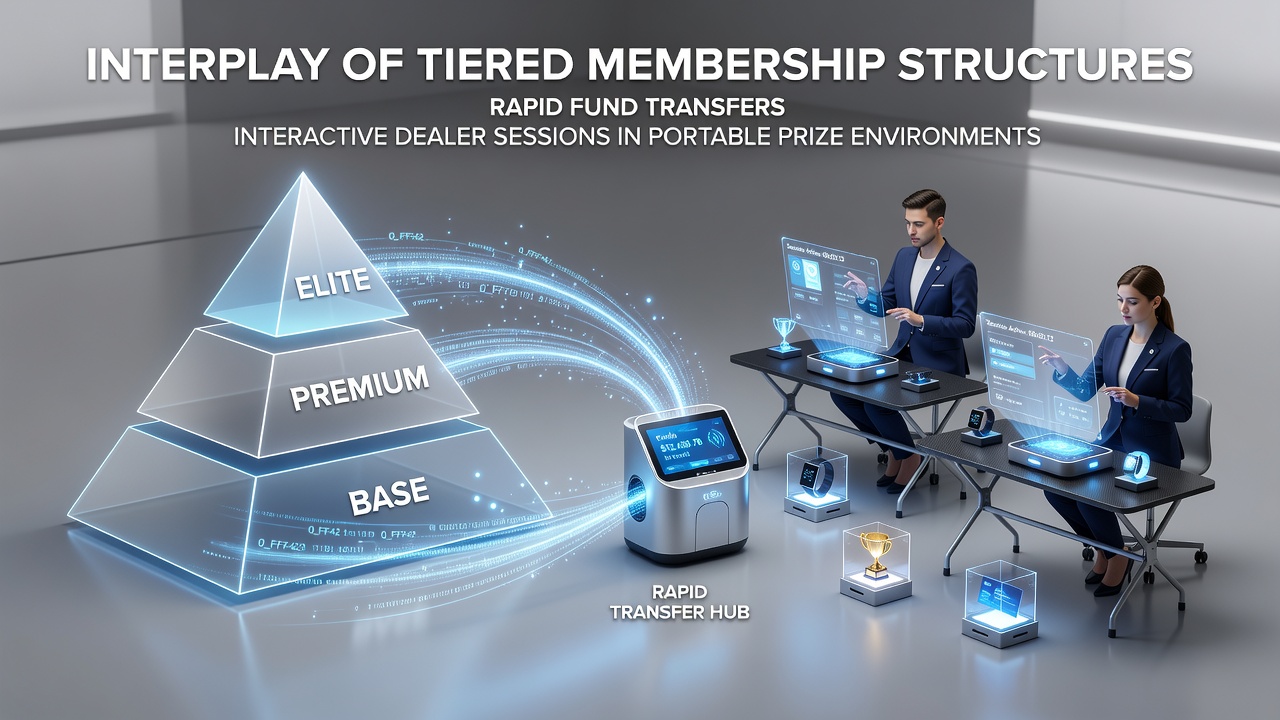
Integration Patterns Among Loyalty Tiers, Fast Funding Options, and Live Dealer Formats in Portable Gaming Arenas
Portable prize environments continue to evolve through combinations of tiered membership structures, rapid fund transfers, and interactive dealer sessions that operate together on mobile platforms. These elements connect in ways that allow users to progress through reward levels while moving funds quickly and joining live sessions from various locations. Data collected across multiple regions shows steady growth in adoption rates for systems that link these features into single mobile applications.
Tiered Membership Structures and Their Core Functions
Tiered membership structures organize player activity into progressive levels based on participation metrics such as deposit volume and session duration. Higher tiers unlock additional tools including priority access to certain games along with customized reward multipliers. Observers note that platforms often update tier criteria quarterly, with changes announced through in-app notifications that detail point accumulation rules and benefit schedules. Research from the University of Nevada Reno indicates these systems maintain consistent engagement patterns when benefits scale predictably with user activity.
Rapid Fund Transfers in Mobile Contexts
Rapid fund transfers enable deposits and withdrawals that complete within minutes through integrated payment processors. Systems support multiple methods including digital wallets and bank links that process transactions without extended verification delays. Figures from the Canadian Gaming Association reveal average transfer times decreased by 35 percent between 2024 and 2026 across major operators. These speeds allow users to maintain continuous play sequences while moving between different game types without interruption from funding steps.
Interactive Dealer Sessions on Portable Devices
Interactive dealer sessions bring real-time table games to mobile screens through streaming technology that supports two-way communication. Users join tables where dealers respond to chat inputs and manage game pacing according to standard rules. Studies conducted by Gambling Research Australia document that session retention rates increase when mobile interfaces maintain stable connections and low latency during peak hours. July 2026 saw several operators expand server capacity in response to rising concurrent user numbers reported in quarterly performance summaries.
Platforms combine these components so that tier status influences transfer limits and dealer session availability. For instance, mid-level members gain access to dedicated tables with reduced minimum bets while top-tier accounts receive expedited withdrawal processing that bypasses standard review queues. This linkage creates pathways where activity in one area accelerates progress in others.

Observed Interactions Across Features
Those who track platform analytics report that rapid transfers often serve as entry points into dealer sessions for users seeking to capitalize on time-limited promotions tied to specific tiers. A case documented in industry reports from the Nevada Gaming Control Board highlighted an operator that synchronized tier resets with transfer bonuses, resulting in measurable upticks in live session participation during the adjustment period. Such alignments demonstrate how the three elements reinforce each other when scheduled to overlap.
Portable environments add mobility constraints that platforms address through adaptive interfaces. These adjust display elements based on connection quality while preserving core functions like tier progress tracking and transfer confirmations. Data indicates users in regions with variable network coverage maintain higher completion rates for multi-step actions when applications include offline caching for tier status and pending transfer details.
Regional Developments Through Mid-2026
Reports issued in July 2026 by European trade groups noted expanded testing of cross-border transfer protocols that integrate with tier systems used by international operators. These tests focus on compliance verification that occurs in background processes without extending transaction times. Meanwhile, academic papers from institutions in Australia examine how interactive dealer features influence tier progression rates when paired with instant funding tools. Findings suggest combined access correlates with extended session lengths across sampled user groups.
Operators continue to refine notification systems that alert users to tier milestones reachable through combined transfer and session activity. These alerts appear in formats that allow quick navigation back into active games without requiring separate menu navigation.
Conclusion
The interplay between tiered membership structures, rapid fund transfers, and interactive dealer sessions forms interconnected systems within portable prize environments. Available data from regulatory bodies and research institutions across North America, Europe, and Australia shows these features operate most effectively when their mechanics align through shared user pathways. Continued monitoring of performance metrics through 2026 will likely reveal further adjustments as operators respond to usage patterns and technological capabilities.