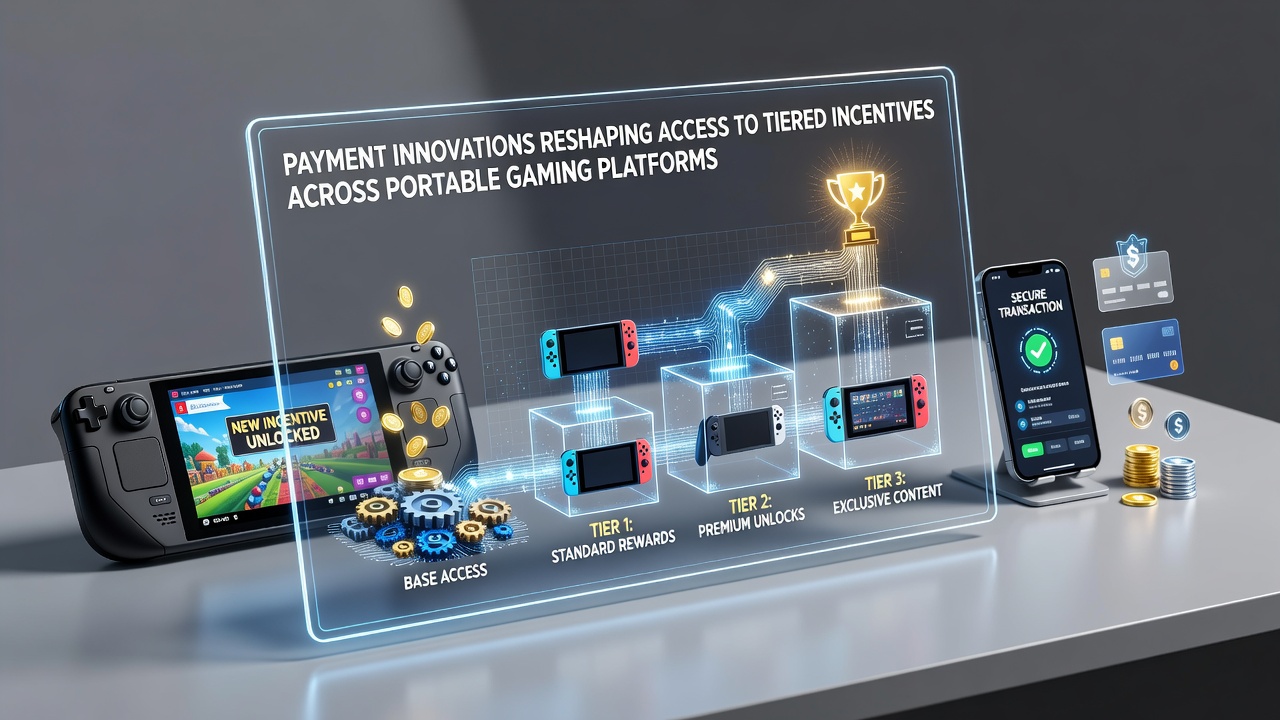
Payment Innovations Reshaping Access to Tiered Incentives Across Portable Gaming Platforms
Payment systems in portable gaming have advanced through digital wallets, instant transfer protocols, and integrated platform billing that streamline how users reach successive reward levels in mobile applications. These developments connect financial transactions directly to incentive programs where players unlock escalating benefits such as exclusive content, accelerated progression, and personalized offers based on cumulative activity.
Shifts in Mobile Transaction Infrastructure
Portable devices now support multiple payment rails including near-field communication, tokenized card processing, and account-to-account transfers that reduce friction during in-app purchases. Data from the Entertainment Software Association shows that mobile gaming accounted for over 60 percent of total industry revenue in recent years, with payment speed emerging as a key factor in user retention across subscription and free-to-play models.
Developers integrate these tools so that reaching a new incentive tier triggers automatic eligibility checks without separate verification steps. Research indicates that platforms using unified billing APIs see higher completion rates for tiered reward sequences because users complete purchases within the same session rather than navigating external sites.
Connecting Payments to Progressive Reward Access
Tiered incentive structures rely on accurate tracking of spend and engagement metrics, and newer payment solutions feed real-time data into loyalty engines. When a transaction processes through a portable platform's native system, the associated reward account updates immediately, granting access to higher benefit brackets such as bonus currency multipliers or early event participation.
Observers note that regions adopting standardized open banking frameworks, including parts of the European Union and Australia, experience faster rollout of these connected systems. A university-led analysis of transaction logs from major app stores found that games employing instant settlement reduced the average time between purchase and reward activation by 45 percent compared with legacy card methods.
Platform-Level Implementation Examples
Major operating systems have introduced features that embed payment credentials at the device level, allowing seamless transitions between different gaming titles while maintaining a single view of accumulated progress toward incentive tiers. One documented case involved a popular role-playing franchise that linked its VIP ladder directly to the platform billing service, resulting in measurable increases in tier advancement among users who previously abandoned mid-process.
Additional integrations appear in cloud-based gaming services where payment events on portable hardware sync with server-side progress trackers. This setup supports cross-device continuity so that a user advancing through incentive levels on a smartphone continues from the same point on a tablet without manual reconciliation.
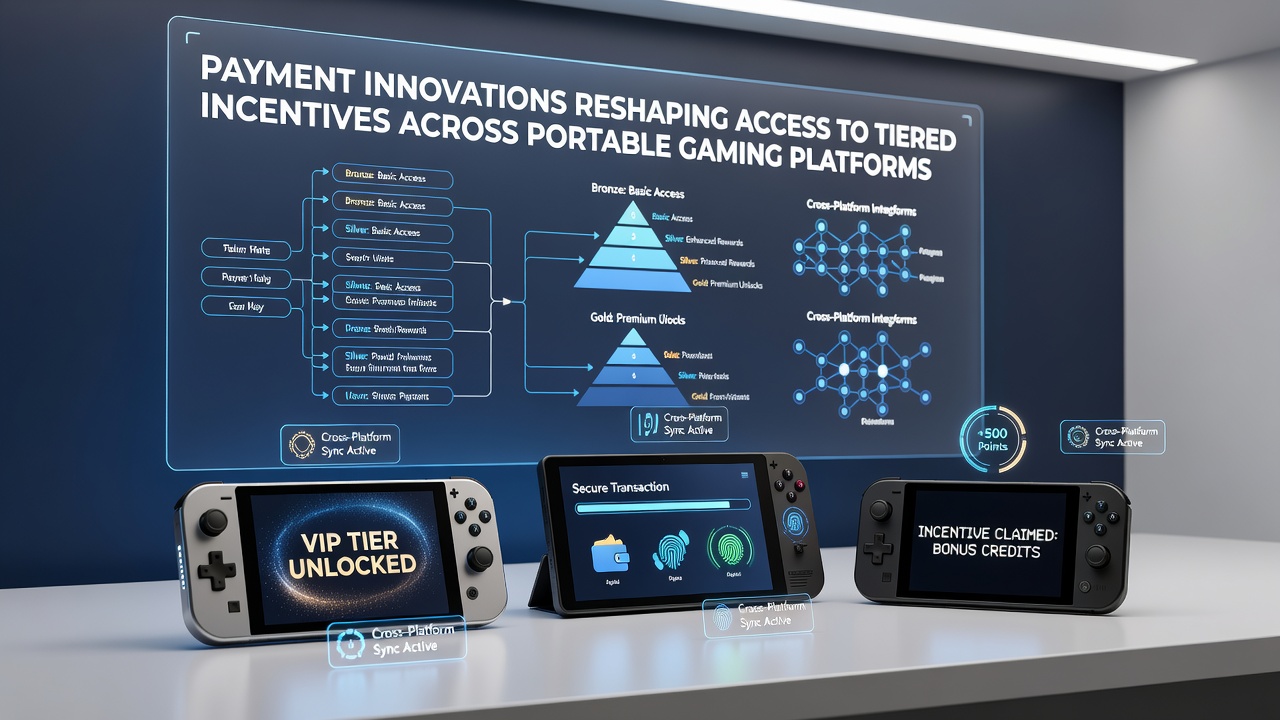
Regulatory and Security Considerations
Authorities in Canada and Singapore have issued guidelines on consumer data handling within digital payment flows for entertainment applications, emphasizing consent mechanisms that accompany tiered reward enrollment. These rules require clear disclosure of how transaction information feeds into incentive calculations, which in turn shapes how developers design onboarding sequences.
Security protocols such as biometric confirmation and device-bound tokens now accompany most high-value purchases that unlock premium incentive brackets. Industry reports compiled in June 2026 highlight that platforms adopting these layered authentication methods recorded lower rates of disputed transactions while maintaining steady progression through reward tiers.
Emerging Patterns in User Behavior
Analytics platforms tracking portable gaming sessions reveal that users who complete payments through native wallet services reach subsequent incentive levels at higher frequencies than those relying on external checkout flows. The pattern holds across genres, from strategy titles to simulation experiences, suggesting that reduced transaction latency directly supports sustained engagement with tiered systems.
What's interesting is how payment innovation also influences regional access disparities, since markets with mature instant-payment networks show broader participation in higher reward brackets among lower-frequency players. Figures from trade association surveys confirm that simplified funding options correlate with wider distribution of users across multiple incentive stages rather than concentration at entry levels.
Conclusion
Payment innovations continue to redefine pathways to tiered incentives by embedding financial operations within portable gaming environments, supported by evolving infrastructure, security standards, and cross-platform data flows. As these systems mature, the linkage between transaction efficiency and reward accessibility becomes more pronounced across diverse device ecosystems and geographic markets.