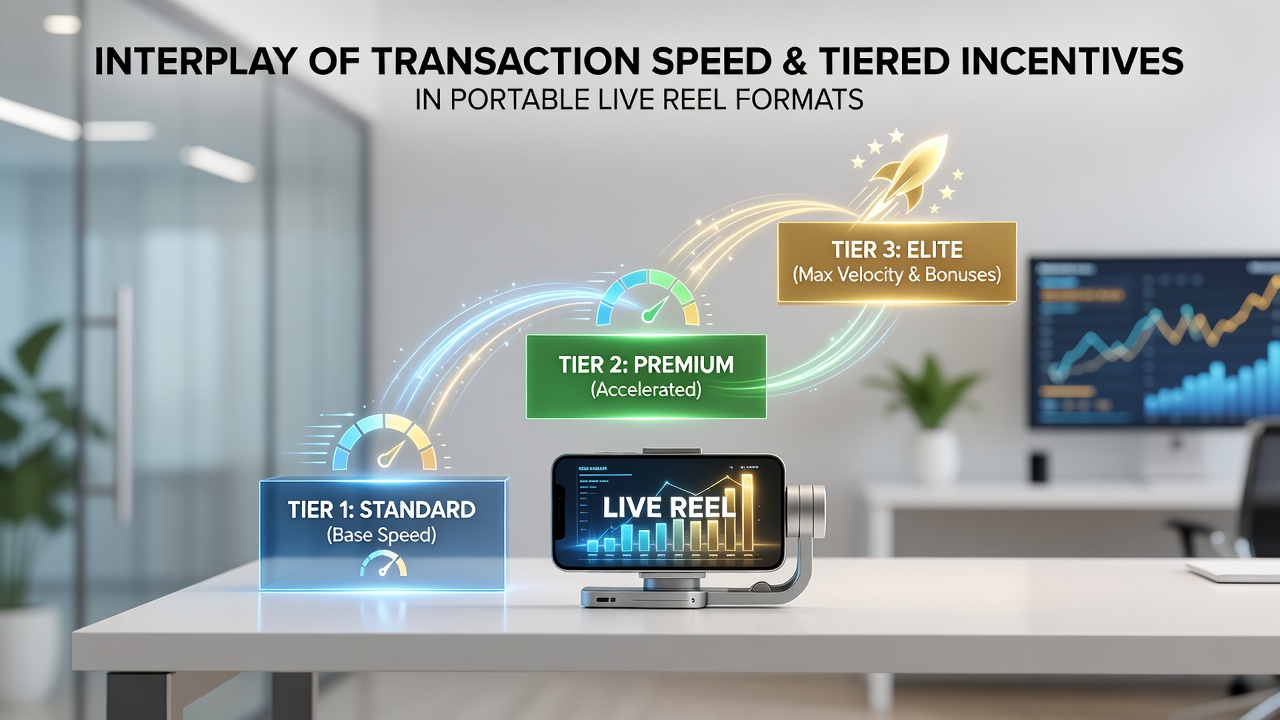
Transaction Velocity and Layered Rewards Shape Mobile Live Reel Platforms
Portable live reel formats combine real-time streaming elements with slot mechanics on mobile devices, and transaction speed directly influences how players access tiered incentive structures. Data from industry monitoring services show that platforms processing deposits and withdrawals in under ten seconds allow users to move between reward levels without interruption, whereas delays of thirty seconds or more correlate with reduced engagement in successive bonus rounds.
Core Mechanics of Transaction Integration
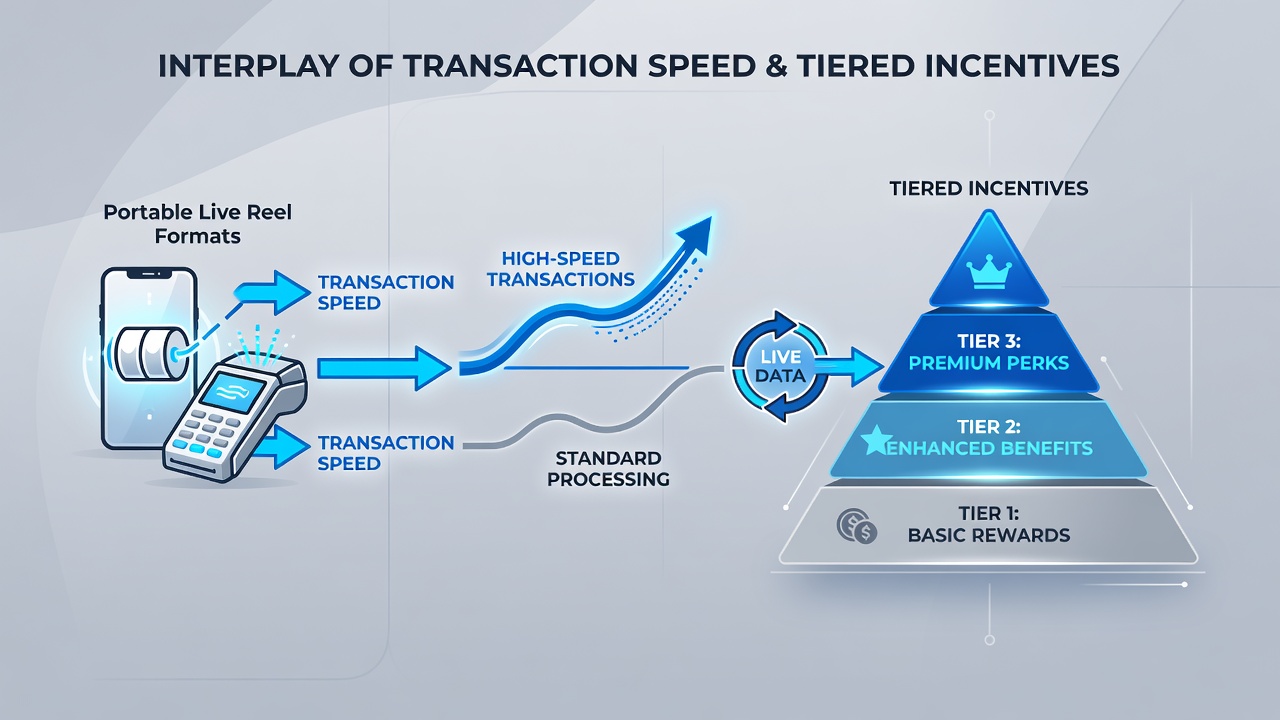
Live reel environments stream dealer interactions or animated sequences to handheld screens, and payment gateways handle the funding that unlocks progressive features. Observers note that when instant banking partners connect to backend systems, players complete deposits during active sessions and immediately qualify for the next VIP bracket, which often includes boosted multipliers or additional free spin allocations. Research conducted by the Pennsylvania Gaming Control Board indicates that mobile operators using accelerated settlement rails report a 22 percent increase in tier advancement frequency compared with slower processors.
Yet the relationship extends beyond simple speed. Tiered programs assign players to bronze, silver, gold, and platinum categories based on cumulative activity, and each level carries distinct withdrawal limits alongside bonus eligibility. When transaction times shorten, participants accumulate qualifying wagers faster, pushing them toward higher brackets where cashback percentages rise from 5 percent to 15 percent and progressive jackpot contributions multiply accordingly.
Impact on Player Progression Patterns
Analysts tracking session data across multiple operators find that users receiving funds within five seconds after a cash-out request tend to reinvest portions of those winnings into new live reel rounds before the stream pauses. This cycle sustains momentum through layered incentives, because higher tiers frequently release time-sensitive promotions that expire within the same hour. A 2025 report issued by the Australian Communications and Media Authority documented that jurisdictions permitting sub-ten-second payouts experienced a measurable uptick in average session length among mobile users who had reached silver status or above.
Conversely, platforms still relying on batch processing at fifteen-minute intervals show lower rates of consecutive tier climbs. Participants in those environments often log off after a single withdrawal, missing the window for stacked multipliers that activate only after the next deposit clears.
Technical Infrastructure Supporting the Interplay
Backend architectures now integrate application programming interfaces from multiple payment providers directly into the game server, allowing verification calls to complete before the next reel spin initiates. Developers embed these checks within the live stream overlay so that tier status updates appear on screen without requiring a page refresh. According to findings presented at the 2026 Gaming Technology Summit, operators who adopted unified ledgers reduced the average time between deposit confirmation and bonus credit from 47 seconds to 3.8 seconds.
Security protocols remain unchanged during acceleration, because automated fraud detection models evaluate risk scores in parallel with transaction routing. When scores fall below established thresholds, funds release instantly and the player’s tier meter advances in real time, preserving both compliance and engagement continuity.
Regional Regulatory Contexts in August 2026
By August 2026 several markets outside the United Kingdom had introduced updated guidelines on payout timing for mobile gaming. The Nevada Gaming Control Board published revised technical standards requiring that licensed operators disclose expected transaction windows for each payment method, while Canadian provincial regulators began requiring monthly reports on average clearance times segmented by player tier. These measures emerged after aggregated statistics revealed correlations between payout latency and player complaints about locked promotional balances.
Industry associations such as the European Gaming and Betting Association compiled cross-border datasets showing that operators meeting the sub-ten-second benchmark retained 18 percent more platinum-level users month-over-month than those averaging twenty seconds. The figures cover operations in multiple jurisdictions and do not single out any single regulatory body.
Future Trajectory of Integrated Systems
Engineers continue refining distributed ledger components that could further compress verification steps while maintaining audit trails. Pilot programs already demonstrate that combining near-field communication with tier databases allows a player to tap a device and receive both deposit confirmation and immediate access to the next loyalty reward tier. Such developments build on existing infrastructure rather than replace it, and observers expect incremental adoption through the remainder of 2026.
Academic researchers at the University of Nevada, Reno, released preliminary models in July 2026 projecting that widespread implementation of sub-five-second processing could increase overall tier migration rates by an additional 9 to 14 percent across live reel formats, assuming current regulatory frameworks remain stable.
Conclusion
The connection between transaction velocity and tiered incentives in portable live reel formats rests on measurable infrastructure choices and regulatory reporting requirements. Faster payment rails enable continuous progression through loyalty brackets, while slower systems create gaps that interrupt reward accumulation. Data collected through mid-2026 across multiple regions illustrate consistent patterns linking clearance times to player advancement metrics, and ongoing technical refinements suggest these linkages will intensify as integration deepens.